
Building & Furnishing a Home in Bluffton and the Lowcountry: Where to Save and Where to Splurge
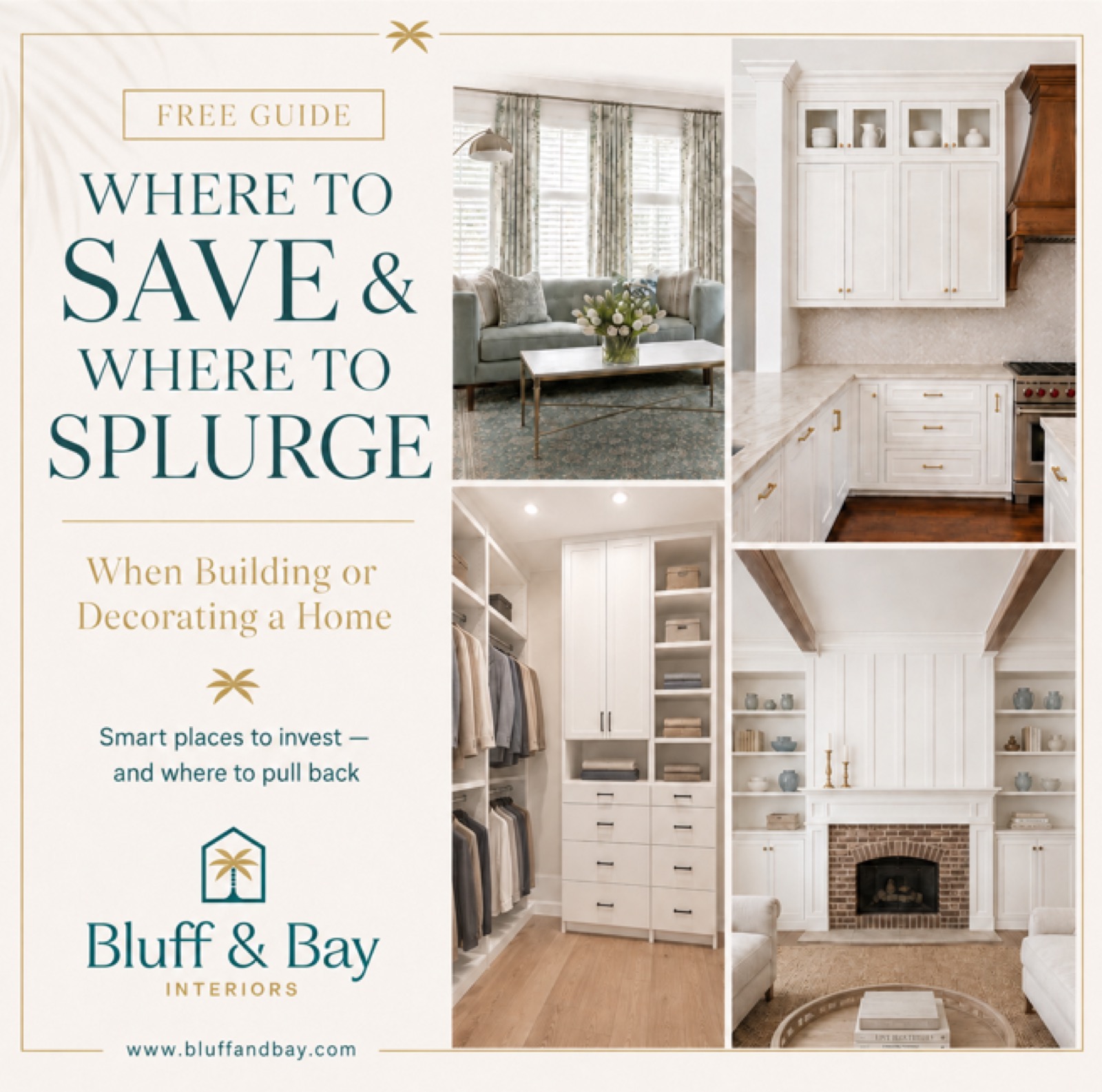
Building a home in Bluffton, Hilton Head, or elsewhere in the South Carolina Lowcountry comes with hundreds, if not thousands, of decisions.
Where should you spend the extra money? Where can you pull back without regretting it later? And which upgrades actually make a home feel custom, rather than simply making the construction budget bigger?
The answer isn’t necessarily to choose the most expensive option everywhere. In fact, some of the most beautiful homes mix significant investment in a few key areas with surprisingly budget-friendly selections elsewhere.
If I were prioritizing a new-build budget, these are the areas where I would save, and where I would splurge.
Splurge: Millwork, Trim and Architectural Detail
If there is one category where I encourage clients to spend more during construction, it is architectural millwork.
Judges paneling, wainscoting, tall crown and cove molding, substantial baseboards, coffered ceilings and other trim details immediately make a home feel more finished, custom and expensive.
This is especially important in Lowcountry homes, where architectural detailing is such a natural part of the aesthetic. Even a relatively simple room can feel special when the proportions of the moldings and trim are right.
Ceiling treatments can make an enormous difference as well. Wood beams, tongue and groove planking, cedar ceilings and other architectural details add warmth and character that drywall alone simply cannot provide.
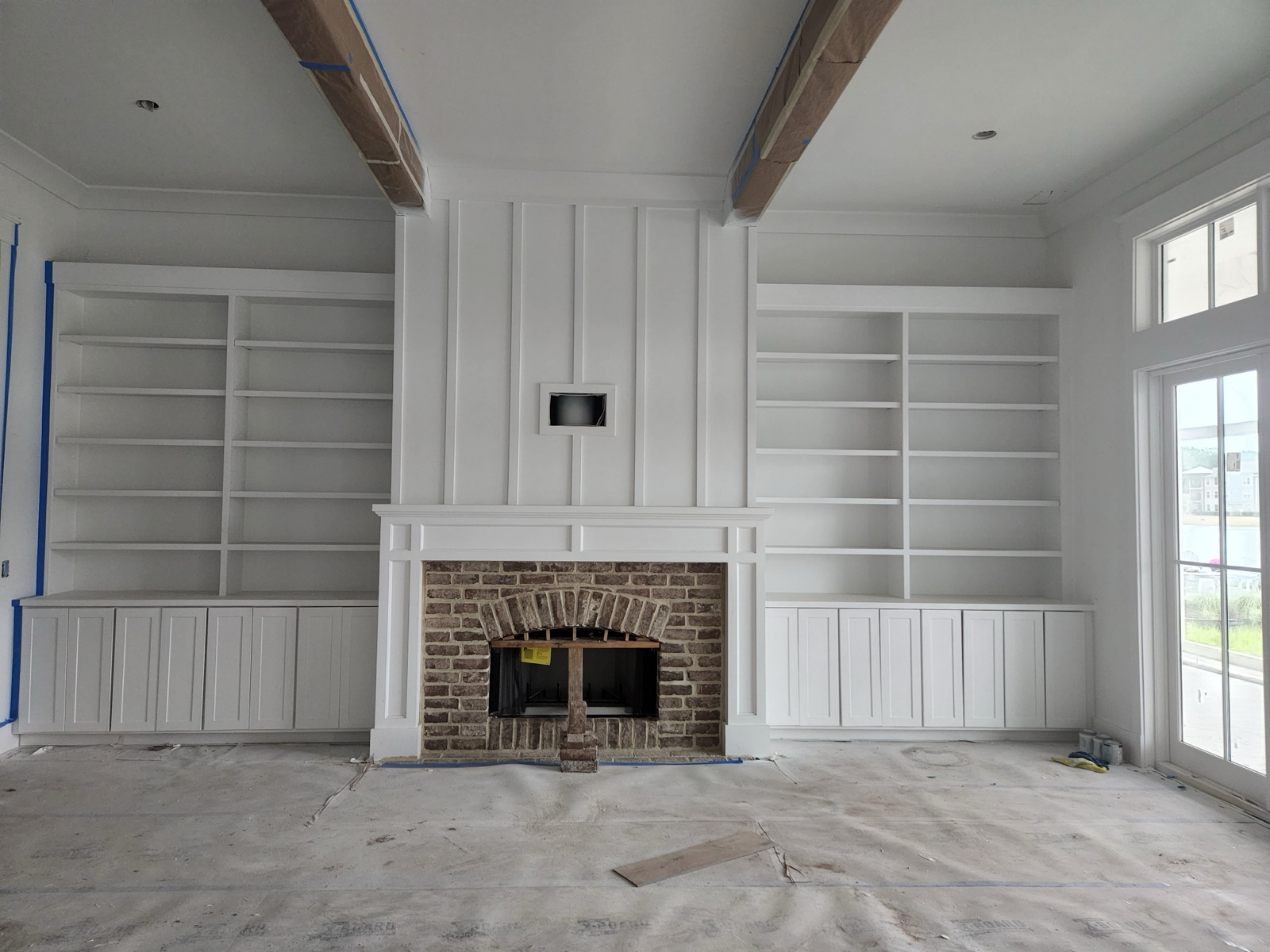
And beams don’t necessarily mean spending a fortune on massive pieces of reclaimed or exotic wood. A beautifully constructed wrapped beam can give you much of the same visual impact for a fraction of the cost.
These are also upgrades that are far easier to incorporate during construction than to add several years later.
Verdict: Splurge.
Splurge: Interior Doors
Doors are something people rarely think about until they live with them.
A lightweight hollow core MDF door feels very different from a substantial solid wood or solid core door. You notice it when you open it, close it and even when you walk through the house.
Better doors also allow you to use more interesting panel profiles, upgraded hardware and finishes that complement the rest of the architecture.
If upgrading every door stretches the budget too far, prioritize the primary living areas and primary suite first.
Verdict: Splurge, or at least upgrade from basic builder grade.
Splurge: Kitchen Cabinetry
The kitchen is one place where cabinetry quality matters.
I generally recommend investing in solid, well constructed cabinet boxes and quality hardware rather than selecting cabinets based solely on door style or paint color.
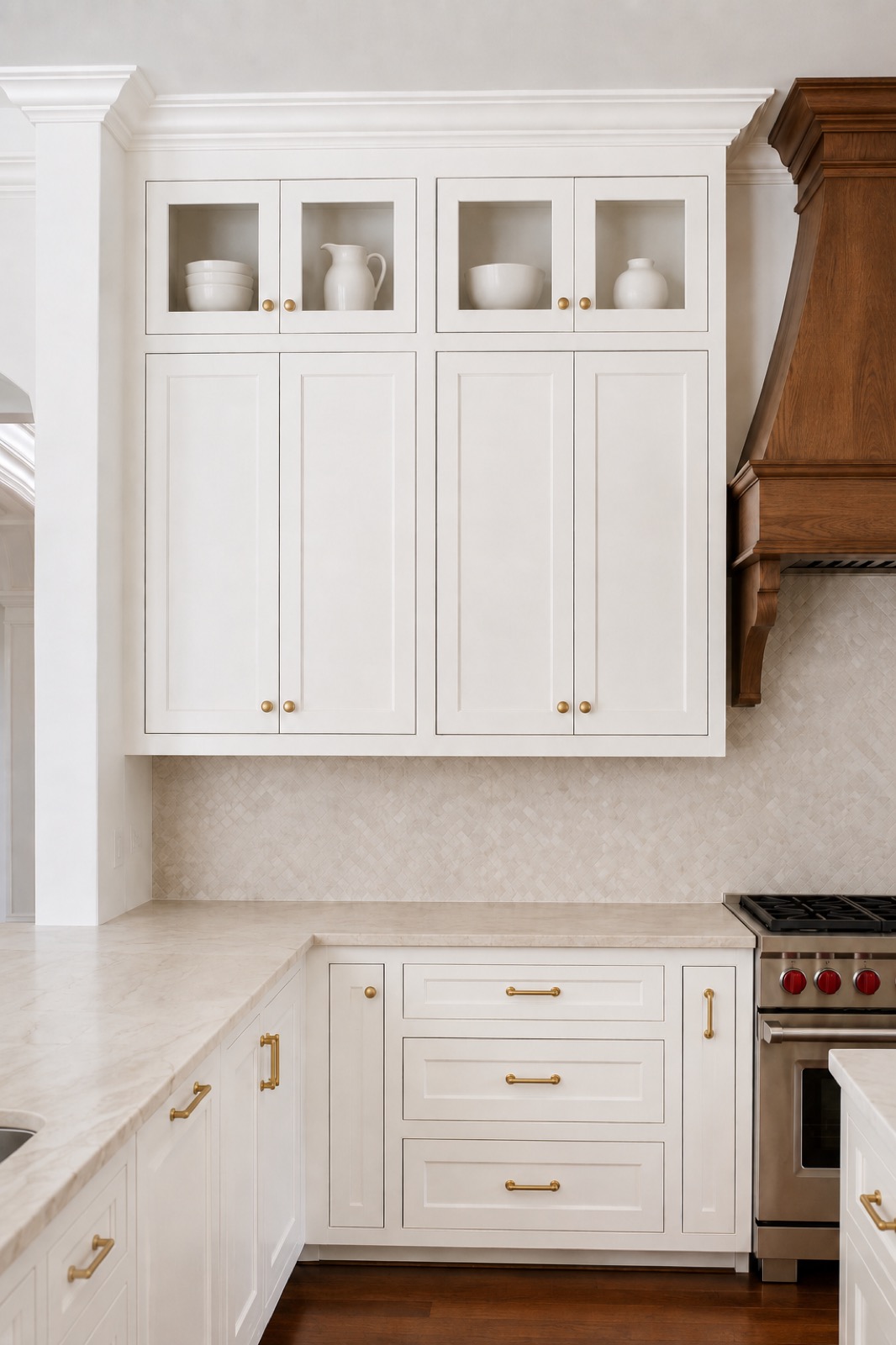
Scale is also extremely important in today’s Lowcountry homes. Many new builds have 10, 11 or 12 foot ceilings. Installing one standard row of upper cabinets can leave a huge amount of empty wall above the kitchen and make the cabinetry feel undersized for the room.
I often recommend stacking upper cabinets, for example a 42 inch upper with an additional 15 or 18 inch cabinet above it. That additional height makes the cabinetry feel proportional to the architecture and gives the kitchen a much more finished appearance.
That doesn’t mean every cabinet in the house needs to come from the most expensive line.
Most cabinet dealers represent several manufacturers or product lines. Even among brands offering quality construction, pricing can vary dramatically depending on available customization, finishes, door styles and modifications.
You might use a higher end semi-custom or custom line in the kitchen, where special sizing and detailing matter, and then use a more moderately priced cabinet line in the laundry room, secondary bathrooms or utility spaces.
That is exactly the kind of strategic budgeting that allows you to spend where people will actually see and appreciate it.
Verdict: Splurge in the kitchen. Save selectively elsewhere.
Splurge: Closets
Closets are one of the most practical places to invest, because along with the kitchen, they are where so much of your everyday “stuff” needs to be organized.
A well designed closet gives everything a home, which makes it much easier to stay organized. Going beyond the basic builder package of a few rods and shelves is usually worth the investment.
If you have high ceilings, consider pull down hanging rods for off season clothing or items you rarely use. Built in drawers let you keep undergarments, accessories and folded clothing right where you get dressed instead of going back and forth to the bedroom. Jewelry drawers, shoe storage and a hanging valet rod can make getting dressed, packing for a trip or steaming clothing much easier.
Enclosed cabinetry is another worthwhile upgrade for handbags, bed linens or less frequently used clothing, keeping everything protected and out of sight.
A thoughtfully planned closet may not be the first thing guests notice, but it is something you will appreciate every single day.
Verdict: Splurge.
Save: Rugs
There are certainly spectacular hand knotted Persian and Oriental rugs that can cost $10,000, $20,000 or considerably more.
But for many homes in Bluffton and Hilton Head, that isn’t necessarily where the budget needs to go.
Natural fiber rugs, jute, sisal look rugs and textured wool blends work beautifully with the relaxed coastal aesthetic that is so popular throughout the Lowcountry.
A large jute rug can give you texture and warmth without fighting with patterned fabrics, artwork or upholstery, and there are excellent options at very reasonable price points.
In a casual coastal home, an $1,200 rug can sometimes look every bit as appropriate as one costing several times more.
Verdict: Save, unless the rug is intended to be the statement piece of the room.
Mix: Lighting
Lighting is one category where I don’t believe there is a universal rule.
Sometimes a spectacular $1,500, $2,500 or even more expensive chandelier completely makes the room. A great fixture over a dining table, kitchen island or in a two story foyer can function almost like sculpture.
In those situations, spending more can be worth it.
But lighting prices can also be surprisingly arbitrary. I routinely see fixtures with remarkably similar designs ranging from $500 to $5,000, and most people walking into the finished room would have no idea which was the expensive one.
Spend when the fixture is truly special. Save when you can achieve the same scale, finish and overall look with a more moderately priced alternative.
And don’t forget scale. A $4,000 chandelier that is too small for the room is still the wrong chandelier.
Verdict: Mix. Splurge on a few statement fixtures and save elsewhere.
Splurge: Your Main Furniture Pieces
Your primary furniture should be where a significant portion of the furnishing budget goes.
The living room sofa that gets used every day, your primary dining table and chairs, and the furniture in the primary bedroom are all pieces where construction quality, comfort and durability matter.
A quality sofa may have better framing, suspension, cushioning and fabric options than an inexpensive version that looks similar online.
Dining chairs also take far more abuse than people realize. A well constructed dining chair should feel substantial when you sit in it and shouldn’t begin wobbling after a few years.
Primary bedroom furniture is another area where better drawer construction, hardware and finishes are noticeable over time.
Verdict: Splurge on the pieces you use every day.
Save: Guest Rooms and Secondary Spaces
Your guest bedroom probably doesn’t need the same furniture budget as your primary suite.
A guest bed might be slept in a few weeks each year instead of every night. A dresser might barely be used at all.
This is a perfect opportunity to bring in moderately priced furniture while keeping the overall design cohesive through bedding, lamps, artwork and accessories.
The same applies to bonus rooms, secondary sitting rooms, kids’ rooms and occasionally home offices.
Not every room needs heirloom furniture.
Verdict: Save.
Splurge: Statement Artwork
Artwork is one place where I would rather see one great piece than five mediocre ones.
In a living room, dining room, foyer or primary bedroom, the right artwork can establish the entire color palette and personality of the space.
It also makes a home feel collected rather than decorated all at once.
That doesn’t mean every piece of art needs to be expensive. Mix original artwork with photography, prints, vintage pieces, family pieces and more affordable finds.
But when you have an important wall in a primary space, buying something you truly love is often worth the investment.
Verdict: Splurge selectively.
Splurge: Cabinet Hardware
Hardware is the jewelry of the room.
You can absolutely buy a functional cabinet pull at Lowe’s or Home Depot. But when you compare basic builder hardware with higher end lines such as Richelieu Top Knobs, the difference in finish, weight, design and available sizes can be obvious.
Premium hardware may cost two or three times as much per piece, but it is one of the easiest ways to make otherwise straightforward cabinetry feel more custom.
In a kitchen with dozens of doors and drawers, the total can certainly add up. If necessary, prioritize the kitchen, primary bath and highly visible built ins, then use a simpler option elsewhere.
Verdict: Splurge where it shows.
Save, At First: Landscaping
One of the easiest places to overspend during a new build is landscaping.
Of course, you need the basics: grading, drainage, sod or groundcover where appropriate, foundation plantings and anything required by your neighborhood or architectural review board.
But you don’t necessarily need to install the ultimate landscaping plan the day you move in.
Living in the house for a season can teach you a tremendous amount.
Which areas receive brutal afternoon sun? Where does water collect after one of our Lowcountry downpours? Does your street have a deer problem? Which plants seem to thrive in your neighbors’ yards, and which ones don’t?
Once you understand the property, you can invest confidently instead of replacing half the landscaping two years later.
Verdict: Start smart and add over time.
Splurge: Window Treatments
Custom window treatments are one of the finishing elements that can take a room from nice to truly polished.
Plantation shutters, custom Roman shades and professionally fabricated drapery immediately make a home feel more complete.
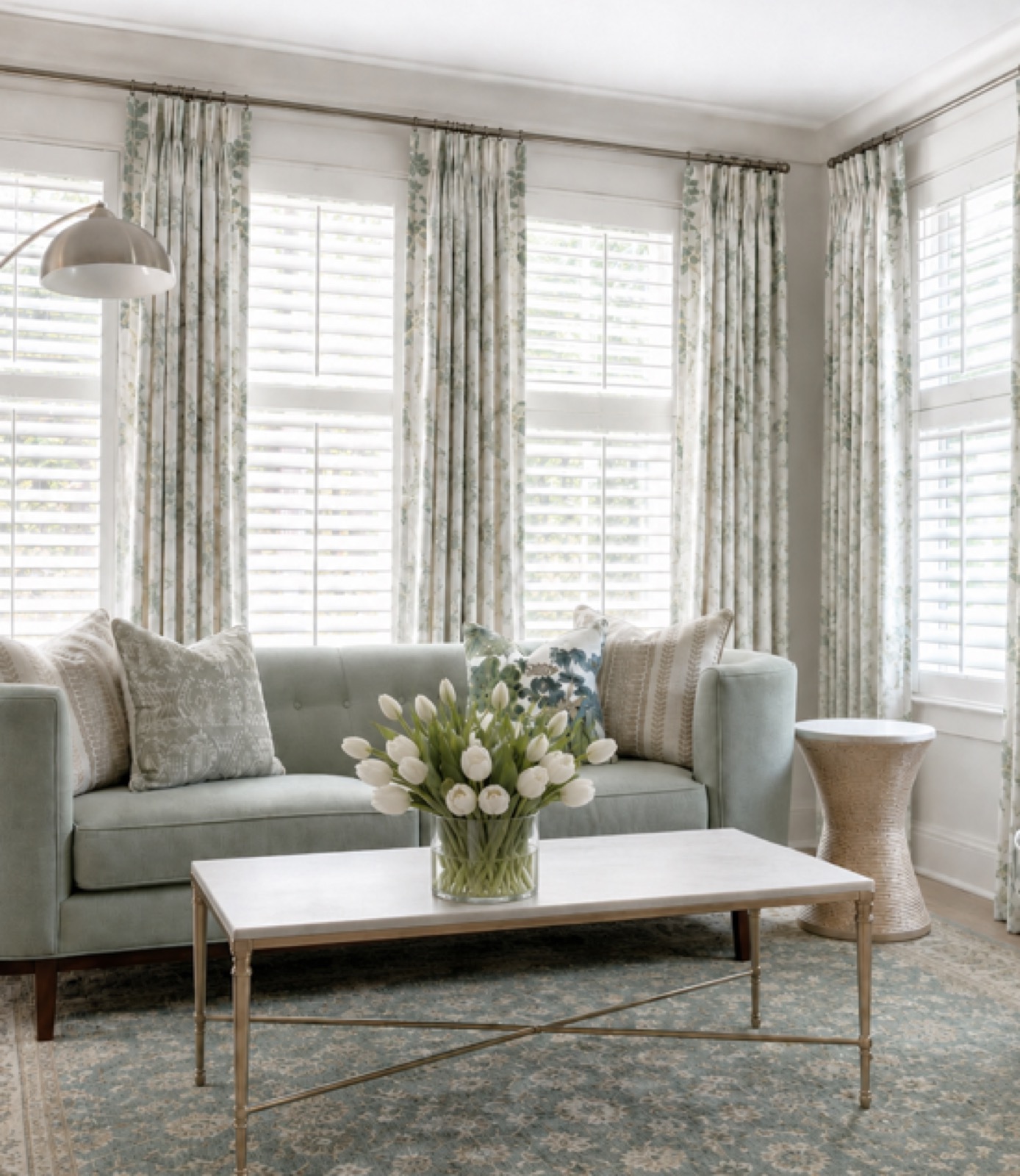
Custom draperies also allow you to hang panels correctly, typically higher and wider than the actual window, which can visually increase ceiling height and make windows feel much more substantial.
Fabric quality, lining, fullness and professional installation all matter.
This is one of those categories where the inexpensive option can sometimes look inexpensive.
Verdict: Splurge, particularly in primary living spaces.
Splurge: Flooring
Flooring is another category I would think carefully about before cutting costs.
It covers almost the entire home, and replacing it after move in is disruptive and expensive.
In our Lowcountry climate, durability matters too. Sand, pets, humidity, wet shoes and indoor outdoor living all take their toll.
You don’t necessarily need the most expensive flooring available, but this is not an area where I would automatically choose the least expensive builder option.
Pay attention to the construction, wear layer, finish, plank width and how the material will perform in our climate, not just the sample color.
Verdict: Buy quality once.
Splurge: Exterior Doors and Highly Visible Entry Details
Your front door is one of the first architectural elements people experience.
A beautiful wood, stained or substantial painted entry door paired with quality hardware can dramatically improve the perceived quality of the entire home.
The same principle applies to decorative exterior brackets, porch ceilings, columns and other highly visible Lowcountry architectural details.
You may not need upgraded finishes everywhere, but money spent at the entrance tends to deliver a lot of visual impact.
Verdict: Splurge strategically.
Save: Decorative Accessories
You do not need to spend $500 on every decorative bowl.
Accessories are one of the easiest categories to collect over time and one of the best places to mix price points.
Books, vintage pieces, baskets, pottery, framed photographs and objects collected from travels will often give a home more character than buying every accessory from the same showroom.
Start with fewer pieces. Live in the house. Then add things you actually love.
Verdict: Save, and collect over time.
Mix: Outdoor Furniture
Outdoor living is a major part of life in Bluffton and Hilton Head, so outdoor furniture deserves some investment.
But I don’t think every outdoor piece needs to carry a luxury price tag.
Spend more on the seating you’ll use constantly: a great outdoor sofa, dining chairs or comfortable swivel chairs. Then, consider saving on occasional tables, planters and smaller accent pieces.
More importantly, look at construction and materials. Salt air, humidity, intense sun and afternoon storms can be tough on outdoor furnishings.
The least expensive option isn’t inexpensive if you have to replace it every two years.
Verdict: Mix, with an emphasis on durability.
Where Should You Spend Your Money?
When building and furnishing a home, I encourage clients to think about three things:
Is it difficult to change later? Will I interact with it every day? Does it have a major visual impact on the home?
If the answer is yes, it is probably worth considering the upgrade.
Architectural millwork, kitchen cabinetry, flooring, doors and major window treatments are expensive and disruptive to redo later. A guest room nightstand? Much easier.
The goal isn’t to create a house where every selection is expensive. In fact, the best designed homes rarely work that way.
The goal is to spend intentionally.
Put the budget into the architectural elements and furnishings that create the foundation of the home. Save on items that are easy to replace, rarely used or unlikely to change how the house actually feels.
That mix of high and low is often what creates a home that feels both beautiful and personal, without spending top dollar on absolutely everything.
And in the Lowcountry, where relaxed living is part of the appeal, that balance can be especially important.
A Bluffton or Hilton Head home doesn’t have to feel overly formal or precious to feel luxurious. The details, proportions, materials and thoughtful choices are what make the difference.