
Choosing Hardware and Fixtures with Ease and Confidence
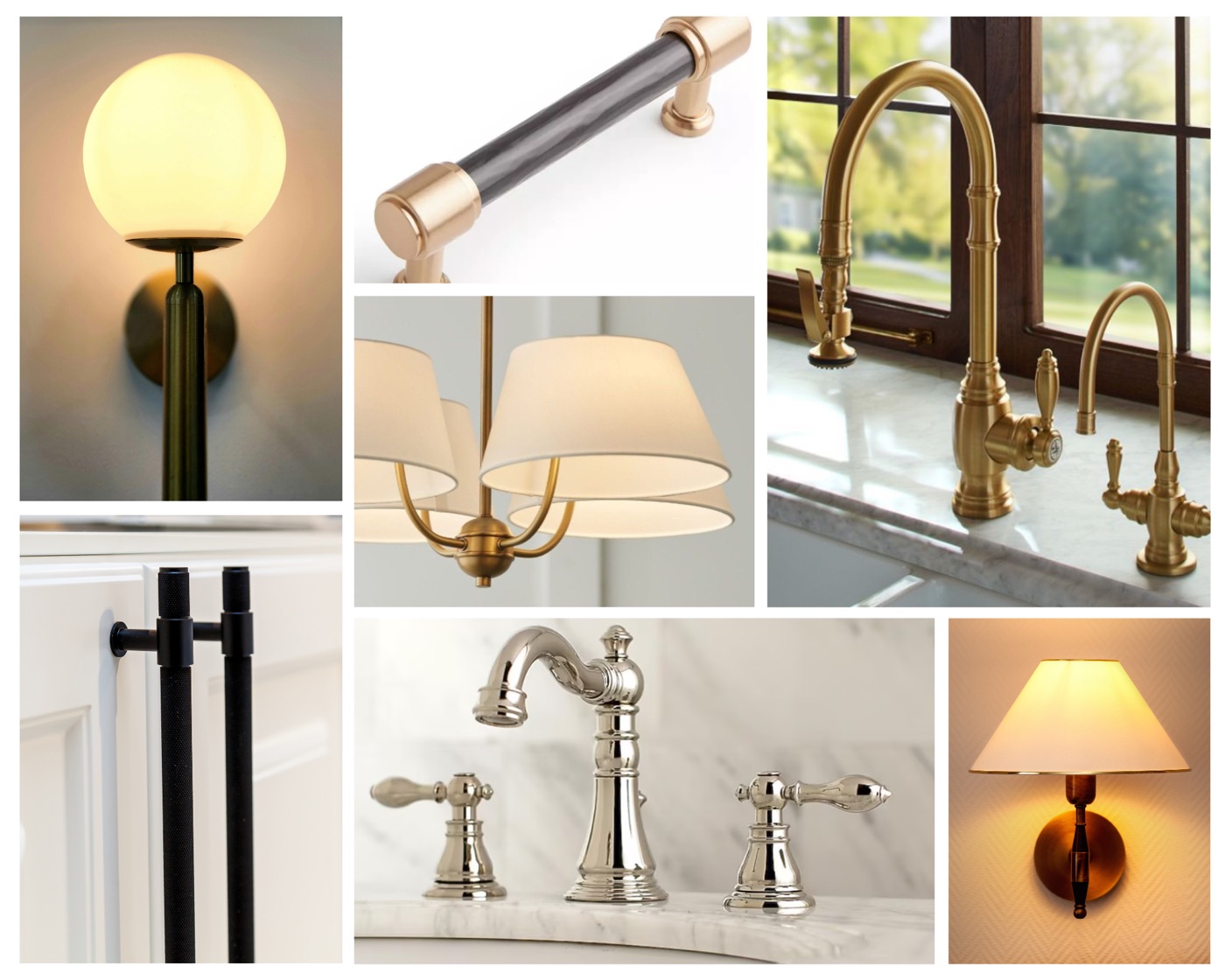
One of the most overwhelming parts of building a new home is selecting all the hardware and fixtures. From faucets and plumbing fixtures to door handles, cabinet knobs, and lighting, it can feel like you are making hundreds of tiny but permanent decisions. Many homeowners get stuck because they believe everything needs to match perfectly. The truth is, it does not.
Shift Your Mindset: Coordinate, Do Not Match
Instead of stressing over whether your faucet finish is identical to your cabinet knobs, think of your metal finishes as needing to live in the same zone. They do not need to be a perfect match, just visually compatible. Avoid pairing extremes like a bright, shiny gold with a deep bronze. Stay within the same family of warm or cool tones to create harmony without rigidity. Consider champagne tones as a versatile bridge finish; they sit comfortably between stainless steel and gold, so they coordinate easily with both. When you think in zones instead of exact matches, the whole process becomes easier and less stressful.
Guidelines for Mixing Metals
It is absolutely okay to mix metals as long as you follow a few basic rules.
Keep Like With Like
In bathrooms, faucets, shower heads, and plumbing fixtures should all match, and towel bars and rings should also be consistent. In kitchens, faucets and pot fillers should match, and cabinet hardware should all be the same finish, though you can add interest by mixing knobs and pulls in different sizes. For doors, handles and hinges should be consistent throughout.
Warm vs. Cool
Warm metals are gold, brass, bronze, copper, and warm nickel. Cool metals are silver, chrome, stainless steel, and aluminum. Neutral metals are black, matte black, gunmetal, and iron. Do not mix a warm gold with a cool-toned gold (think 1980s brass). You can mix a brushed warm gold with a bronze, but mixing warm and cool versions of the same metal usually clashes.
Limit Your Palette
In most rooms, two finishes are enough. Larger spaces can handle three. Use ratios when incorporating mixed metals. If using two metals, roughly 70% should be your primary and 30% your secondary. If adding a third metal, 60% primary, 30% secondary, and 10% an accent. Black often serves as a natural secondary or accent finish, while stainless steel frequently becomes primary or secondary in kitchens thanks to appliances and sinks.
Practical Tips
See it in person. Do not rely on finish names; a brushed brass from one company may look very different from another, so order samples or view in a showroom when possible. Think timeless vs. trendy: brass and polished nickel are enduring classics, while black and copper have been trendier in recent years and are easy to swap out later, and chrome has always been popular but skews modern. Lighting does not need to match exactly. In fact, avoid buying every fixture from the same collection, as it will feel flat and staged. Instead, tie pieces together with subtle details, a shape, tone, or material. A great way to preview combinations is to create a vision board in Canva, PowerPoint, or even Pinterest, pasting fixture images to see how they play together before ordering.
The Bottom Line
Do not fall into the trap of believing everything has to match perfectly. By keeping like elements consistent, staying within tonal families, and limiting your metal palette, you can mix finishes confidently. Your home will feel more layered, intentional, and timeless, and you will avoid the stress of chasing impossible perfect matches.