
7 Things I’d Do Differently If I Were Building My Home Again
Do interior designers make mistakes in their own homes? You bet.
One of the funny things about being an interior designer is that people sometimes assume my own house must be a perfectly executed design laboratory where every measurement is exact, every material performs beautifully and every decision was absolutely the right one.
I wish.
Do designers have regrets in their own homes? You bet we do.
I hesitate to even call most of these “mistakes.” They are really decisions I would make differently now that I have lived with them for a few years. Sometimes you can research something to death and still discover that living with it is different than imagining it. Sometimes your lifestyle changes. Sometimes the dogs completely disregard your carefully thought out plans.
And sometimes you simply don’t think through the entire project the way you should.
That last one is actually something I am much better about when designing for clients. When it is your own house and you’re making hundreds of decisions at once, it is surprisingly easy to say, “That will be fine,” and move on to the next selection.
Every project I work on teaches me something, including my own home.
We built what I would absolutely consider our dream home, and three years later, I feel pretty good that these are some of my biggest regrets. None is catastrophic. Most are mildly annoying. A few make me laugh.
Here are seven things I would do differently if I were building our house again.
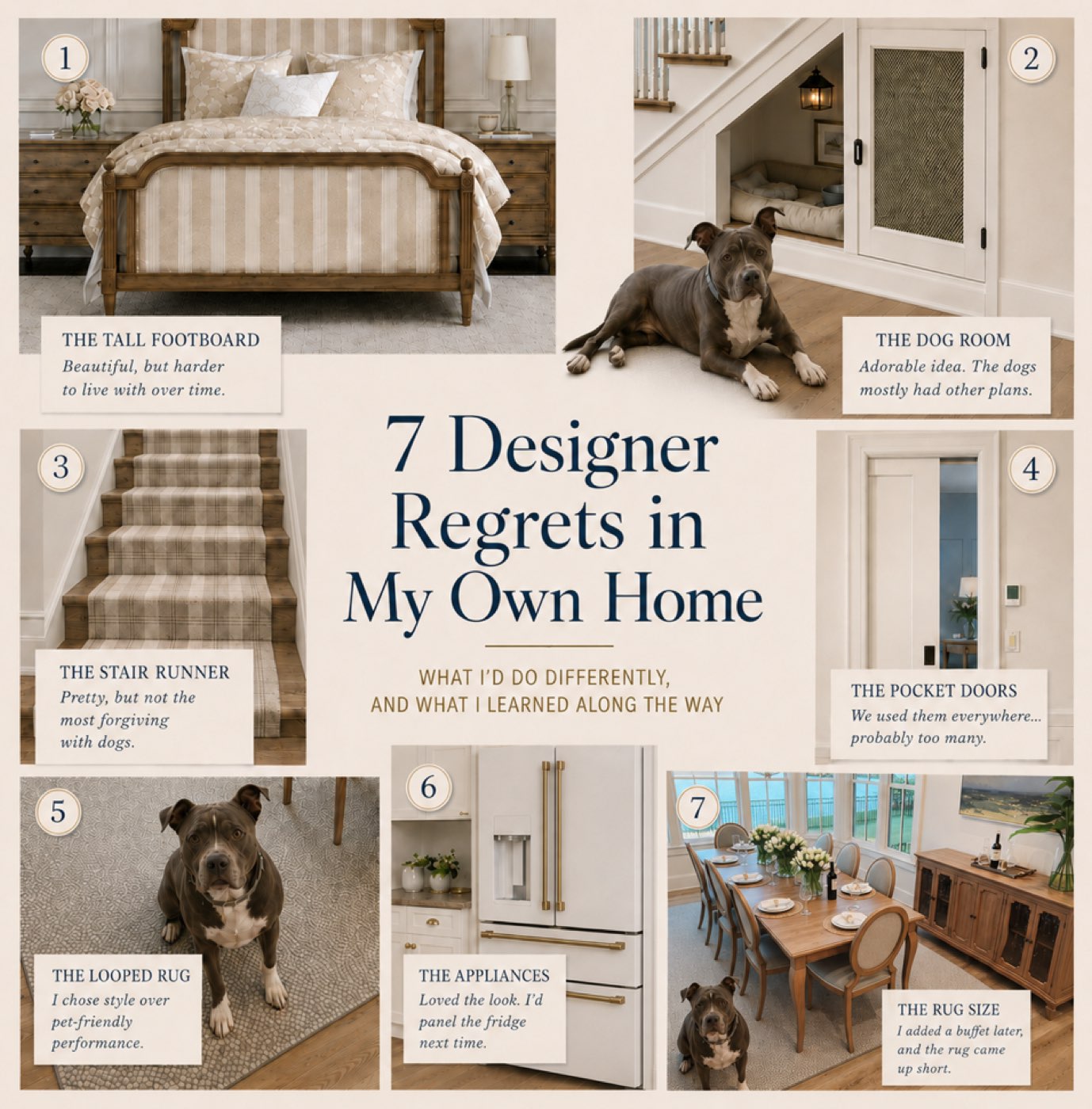
1. I Would Skip the Tall Footboard on Our Upholstered Bed
When I selected our upholstered bed, I loved the taller footboard. It framed the bed beautifully and gave it a more substantial look.
And for a while, I had absolutely no problem with it.
Enter getting older.
Our bed now has not one, but two mattress toppers, because apparently this is who we are now. The mattress sits higher, and changing the sheets has become an Olympic event involving lifting mattresses, wrestling fitted corners and trying to maneuver everything around a footboard that comes up higher than the mattress.
Would I choose the bed again aesthetically? Probably.
Would I choose it knowing that I will someday continue adding layers of cushioning to my mattress in pursuit of a perfect night’s sleep?
Absolutely not.
Lesson learned: Think about how something functions, not just how it looks today. Your needs can change over time.
2. The Adorable Dog Room Under the Stairs That the Dogs Refused to Use
This one seemed like such a good idea.
When we built the house, we created a little room for our dogs under the stairs with a sliding mesh door. It was tucked away, completely their size and, in my mind, adorable.
I envisioned them happily curling up in their cozy little dog bedroom every night.
The dogs had other plans.
They had never been accustomed to being confined in a small space at night, and we have never successfully sold them on the concept.
In hindsight, I would probably have used that valuable square footage for additional storage for my office. Or perhaps a small wine room, which frankly may have been appreciated more.
I had almost completely written the dog room off as wasted space until last night.
We were at a party when a thunderstorm rolled through. When we came home, both dogs had voluntarily gone into their little room under the stairs to ride out the storm. We’ve always kept an extra set of dog beds in their room, “just in case.”
So after three years, it finally has a purpose.
Apparently we didn’t build a dog bedroom. We built a dog storm shelter.
I’ll take it.
Lesson learned: Custom spaces are wonderful when they truly reflect how you live. Just make sure you’re designing around habits that actually exist, not habits you hope everyone in the household will suddenly adopt.
3. I Would Choose a More Forgiving Stair Runner
Our upstairs includes my husband’s office, and the dogs make the trip up and down the stairs with him all day.
We wanted a runner primarily to give them traction, so I selected a beautiful light beige plaid.
It looked fantastic.
What I apparently underestimated was just how much traffic those stairs would get.
Between two dogs making what feels like 20 trips up and down each day, the runner is already showing considerably more wear after only three years than I expected.
Would I still use a stair runner? Absolutely.
Would I choose light beige plaid again?
Probably not.
I would select something with a little more pattern, variation or color that would be more forgiving for the way we actually live.
Lesson learned: Lifestyle wins. Every time. The prettiest choice is not necessarily the best choice if it can’t handle your household.
4. I Would Install Fewer Pocket Doors
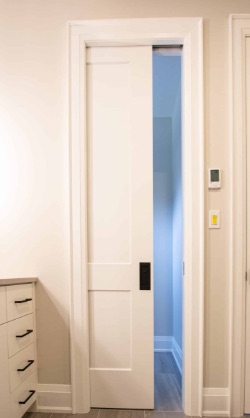
Apparently when we built this house, I was going through a pocket door phase.
We have nine of them.
They’re in two guest bedroom bathrooms, the back kitchen, my office, our primary bathroom suite, both of our closets, my husband’s office closet and one of the guest bedroom closets.
Nine.
Pocket doors can be incredibly useful when you’re trying to conserve floor space or avoid a door swing interfering with cabinetry or furniture.
But we have also discovered that several of ours are almost never closed.
The doors leading into our primary bathroom and closets? Rarely used.
The back kitchen? Almost always open.
For those locations, we probably could have skipped the pocket doors entirely.
And if I were redesigning the guest bathrooms today, I would spend more time looking at the entire floor plan to see whether I could configure the spaces differently and accommodate traditional doors.
Pocket doors absolutely have their place. I’m just not sure my house needed to become their national headquarters.
Lesson learned: Don’t add a feature simply because it solves one problem on a floor plan. Look at whether you will actually use it once you’re living in the house.
5. I Wouldn’t Put a Looped Rug in the Dining Room
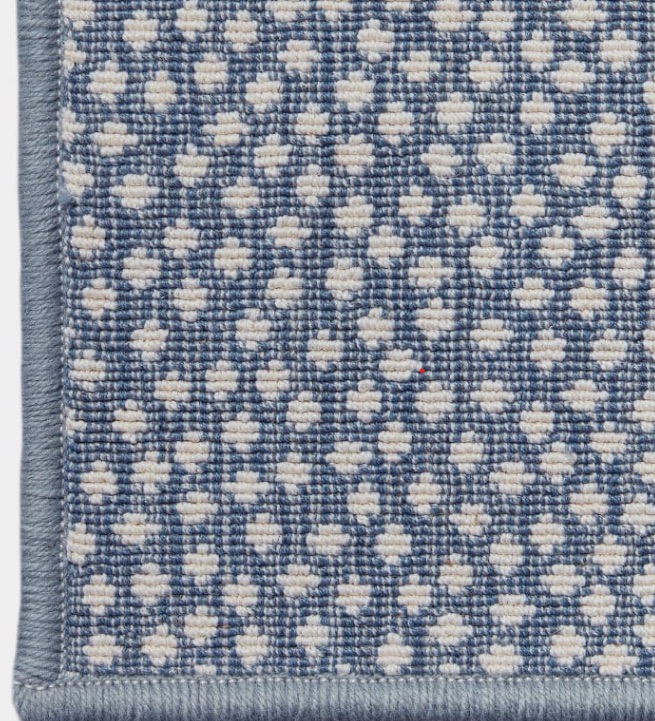
This is another case of choosing style over lifestyle.
I selected a beautiful looped rug for our dining room. My thinking was that the dining room wouldn’t get nearly as much traffic as our main living spaces, so I could get away with something a little less dog-proof.
Once again, Maggie was not consulted.
She loves to bask in the sunlight in that room.
As a result, the rug sees considerably more dog traffic than I anticipated, and her nails have created a few snags in the loops.
Nothing terrible. Nothing that has ruined the rug.
But knowing what I know now, I would have chosen a rug construction that was a little more forgiving for pets.
Lesson learned: When choosing materials, think beyond how often you expect to use a room. Apparently dogs have their own space-planning preferences.
6. I Would Panel the Refrigerator
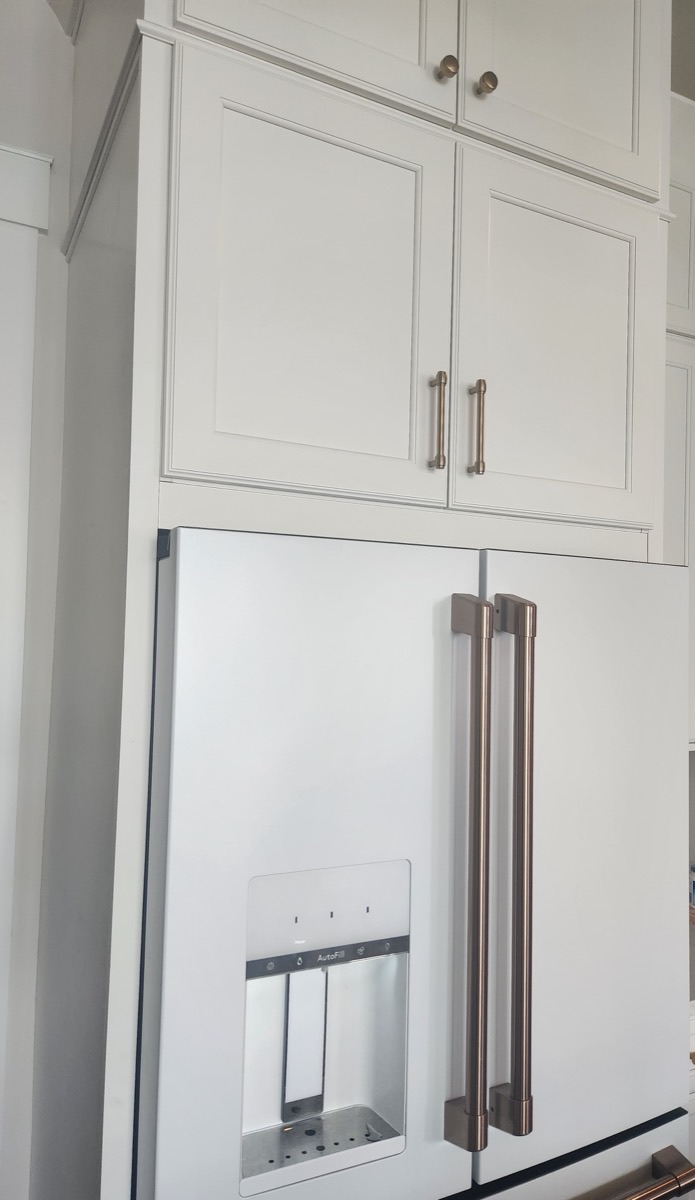
We chose white GE Café appliances with brushed gold hardware.
And visually, I still love them.
The one thing that has always bothered me slightly is the refrigerator.
The white finish has a cooler, almost gray undertone compared with some of the surrounding finishes in our kitchen. Interestingly, the smaller Café appliances don’t bother me nearly as much. Whether it is because of their size, their location or how the light hits them, they seem to read as a brighter white.
Here’s the part where I can’t even claim surprise.
I researched the refrigerator color ahead of time. I knew it had that undertone. And I bought it anyway.
Sometimes you know something might bother you and convince yourself that it won’t.
Spoiler: occasionally it does.
If I were doing the kitchen again, I would probably select a panel-ready refrigerator and integrate it into the cabinetry. It would create a cleaner, more seamless look and eliminate the issue completely.
Do I lose sleep over my refrigerator being slightly too cool-white?
No.
Do I notice it?
I’m an interior designer. Of course I notice it.
Lesson learned: If something catches your attention during the selection process, don’t assume you’ll stop noticing it once it’s installed.
7. I Would Buy the Dining Room Rug 8 Inches Longer
This is perhaps my favorite because it demonstrates exactly why I encourage clients to think about an entire room before purchasing individual pieces.
I selected the dining table and rug first.
I measured appropriately based on the table and chairs, and the rug size worked.
Then I changed the plan.
Instead of the wine rack originally intended for one wall, I decided to add a buffet.
And now?
The buffet floats about eight inches beyond the rug.
Eight inches.
Not enough to make me replace a perfectly good rug.
Just enough to mildly annoy me every time my designer brain notices it.
This is also a great example of how purchasing decisions can become interconnected. The rug wasn’t technically the wrong size when I bought it. The room changed afterward.
The good news?
Maggie is helping speed along my future rug replacement with those aforementioned toenails.
So someday I can solve Regret Number 5 and Regret Number 7 simultaneously.
Very efficient of her.
Lesson learned: Whenever possible, plan the entire room before purchasing. Furniture sizes, rug dimensions, walkways and architectural elements all affect one another.
Would I Do It All Differently?
Not even close.
We built our dream home, and if these are some of the biggest things I would change after living here for three years, I consider that a win.
The house works beautifully for us.
These aren’t disastrous mistakes. They’re the kind of things you discover only after actually living in a space.
And that experience is valuable.
I’ve built several custom homes, worked in furniture and interior design, worked alongside a custom home builder, and now help clients navigate both the building process and the furnishing process. Every one of those experiences has added another layer to what I look for.
My own house has taught me plenty too.
It has taught me to ask:
- How will you actually use this room?
- Do you have pets?
- Will the material hold up?
- What happens if we eventually add another piece of furniture?
- Are we planning the whole space or just solving today’s decision?
- Is this feature something you’ll genuinely use?
- Could this finish bother you once you see it every single day?
That’s why I don’t believe good design is about pretending there will never be a decision you might reconsider.
It’s about thinking through as many of those decisions as possible before they become expensive ones.
And if, three years later, your biggest complaint is that your dog likes your dining room rug a little too much and your footboard makes changing the sheets harder?
I’d say you’re doing pretty well.